Cities do not always need more air conditioners to fight extreme heat. Ancient buildings show that good design can keep people cool while using little or no electricity. This is called passive cooling.
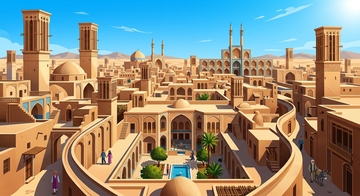
The Iranian desert city of Yazd offers an excellent example. Its traditional houses have thick earth walls, central courtyards, and rooms below ground. Thick walls slow the movement of heat, while courtyards create shade and allow cooler air to collect. Narrow streets and partly covered paths also protect people from the strong sun. (whc.unesco.org)
One of Yazd’s most interesting features is the windcatcher. This is a tower with openings near the top. It catches the wind and guides fresh air down into the building. Some systems move air over underground water. As the water evaporates, the air becomes cooler. The city’s ancient underground water channels, called qanats, helped supply this water. (whc.unesco.org)
Modern researchers are now studying how these old ideas can work in today’s buildings. A 2025 study examined windcatchers in schools across 15 European capitals. The results suggested that they could provide useful cooling and better airflow in many cities. Other new designs combine windcatchers with solar energy and smart controls. (doi.org)
However, architects cannot simply copy one design everywhere. Cooling with water is more effective in hot, dry regions, and it may not be suitable in places with limited water. Local wind, weather, and building materials must also be considered.
Ancient builders carefully studied nature before they built. If modern cities follow the same principle, they can create cooler streets and buildings while using less energy. The cities of the future may become more comfortable by learning from the past.