Mia works at home. Today, she goes to the office. She puts on blue shoes. She takes her bag and food. At the office, she sees her friends.
“Hi!” she says.
They sit at one table. They talk and work. Mia is happy. At night, she goes home.
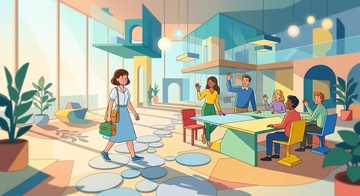
Mia works at home. Today, she goes to the office. She puts on blue shoes. She takes her bag and food. At the office, she sees her friends.
“Hi!” she says.
They sit at one table. They talk and work. Mia is happy. At night, she goes home.
ミアは家で働きます。今日、彼女はオフィスに行きます。彼女は青いくつをはきます。彼女はかばんと食べ物を持っていきます。オフィスで、彼女は友だちに会います。「こんにちは!」と彼女は言います。彼らは一つのテーブルに座ります。彼らは話して、働きます。ミアはうれしいです。夜、彼女は家に帰ります。