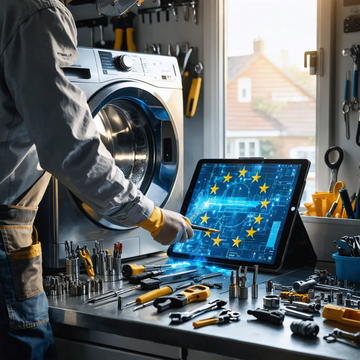
Not long ago, many people bought a fridge or a washing machine by checking only price and energy use. In the EU, that habit is starting to change. The new Right to Repair Directive entered into force on July 30, 2024, and EU countries must apply it from July 31, 2026. It covers products that already have EU repairability rules, including washing machines, dishwashers, fridges, electronic displays, vacuum cleaners, smartphones, and tumble dryers. (commission.europa.eu)
So what changes for shoppers? First, for covered products, manufacturers must repair them when consumers ask, unless repair is impossible. The repair must be free or reasonably priced, and done within a reasonable time. Manufacturers also have to show typical repair prices on a free-access website, and spare parts must be offered at prices that do not discourage repair. For one simple example, EU dishwasher rules already require parts such as filters, racks, and door hinges to be available for up to 10 years, with repair information for professionals available for at least 7 years. (commission.europa.eu)
Second, repair becomes more attractive during the legal guarantee period. If a buyer chooses repair instead of replacement, the legal guarantee is extended by 12 months once. Third, comparing repair offers should get easier. The European Repair Information Form can show the fault, the price, the repair time, and extra costs like transport, and the offer must stay valid for at least 30 days. An EU-wide repair platform is also planned for 2027. (eur-lex.europa.eu)
The bigger shift is cultural. In the EU, an appliance is slowly becoming something you keep longer, not something you replace fast. So before buying, people may start asking new questions: Can this be repaired? How long will parts be available? What will a normal repair cost? In the age of the right to repair, those questions matter almost as much as the price tag. (commission.europa.eu)