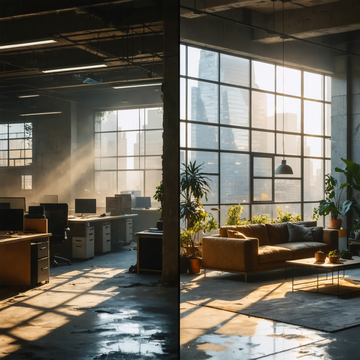
Imagine this. An office tower is quiet. The desks are gone. Then builders come in, and the old office starts a new life as homes. In the United States, this is happening more and more. At the start of 2026, about 90,300 apartments were in the office-to-home pipeline. That was up 28% from 70,600 a year earlier, and almost four times the 2022 level. (rentcafe.com)
This is not just a small trend. Offices now make up 47% of all future adaptive reuse projects, which means projects that give old buildings a new use. One reason is simple: many offices are still not full. RentCafe said national office vacancy was close to 20% in early 2025, and CBRE said office vacancy was 19% in the first quarter of 2025. (rentcafe.com)
Some cities are leading this change. New York has the biggest pipeline, with 16,358 future homes from old offices. Washington, D.C. is next with 8,479, and Chicago follows with 4,360. (rentcafe.com)
City governments are helping too. New York’s 467-m program gives tax benefits for commercial-to-housing projects if they include affordable rental homes. Los Angeles has expanded its Adaptive Reuse Ordinance citywide to make these projects easier. Washington, D.C. is also pushing conversions through downtown programs. (nyc.gov)
But office-to-home projects are not easy. They can take years. Some buildings have too little natural light, very deep floors, or very high costs. Still, the rush is real. Empty offices are not only empty anymore. In many cities, they are slowly becoming places to live. (rentcafe.com)