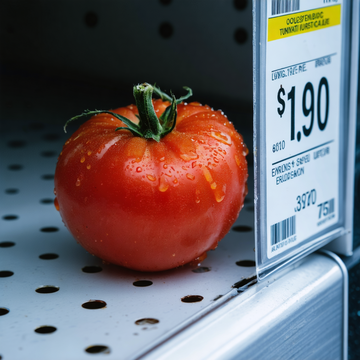
Have you ever looked at a tomato in a supermarket and thought, wait, why is this little thing so expensive?
In the United States, that small surprise has turned into a bigger story. In April 2026, tomato prices were 39.7 percent higher than a year earlier. But overall consumer prices rose 3.8 percent. So tomatoes were getting expensive much faster than inflation in general. That is one big reason people started to talk about tomatoes as a symbol of the cost-of-living problem. (bls.gov)
It makes sense when you think about daily life. Tomatoes are everywhere. They are in salads, sandwiches, burgers, pasta, and tacos. And the U.S. depends a lot on imports for fresh tomatoes. USDA says imports supplied about 68.9 percent of fresh tomato availability in 2025, and Mexico provided 90 percent of U.S. tomato imports during 2023 to 2025. So when tomato supply changes, ordinary people notice it fast. (ers.usda.gov)
Now here is the turn. This was not only about one bad week at the store. The U.S. ended the 2019 tomato suspension agreement on July 14, 2025, bringing back antidumping duties on fresh tomatoes from Mexico. USDA also says imports from Mexico fell after that, while bad weather hurt production in Mexico and freezing temperatures disrupted Florida shipments in early 2026. Less supply, plus trade pressure, helped push prices up. (trade.gov)
So imagine making lunch at home. Bread, cheese, and lettuce go into the cart. Then you reach for tomatoes and stop for a second. Maybe you buy fewer. Maybe you skip them. AP reported shoppers filming high tomato prices in produce aisles because the change felt so personal. And that is the real point. Inflation becomes real when even a simple tomato starts to feel like a luxury. (apnews.com)