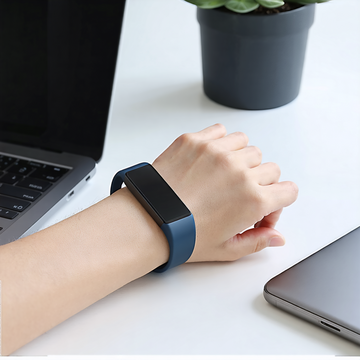
Have you ever wanted a fitness band that shows you nothing? That is the little surprise of the new Google Fitbit Air. Google introduced it on May 7, 2026. It has no screen, starts at $99.99, and sends your health information to the Google Health app on your phone. (blog.google)
Now, here is the setup. Fitbit Air is Google’s smallest tracker yet. It is made to be light, simple, and easy to wear all day and all night. Google says it can track heart rate, steps, calories, sleep, and other body data, and the battery can last up to a week. (blog.google)
Imagine Aya. She works at a desk. She already looks at a laptop all day. She does not want one more bright screen on her wrist. So she wears Fitbit Air to work, on a short walk after lunch, and later in bed. The band stays quiet. No little messages. No buzzing news. In the morning, she opens the app and checks her steps, heart rate, and sleep when she is ready. (blog.google)
But then comes the turn. At first, no screen sounds like a bad idea. Why pay for less? Recent reviews say that “less” is exactly the point. Reviewers liked the calm, distraction-free feeling and the very light design. At the same time, they also said the weak point is clear: without a screen, you must depend more on the phone app. (tomsguide.com)
So, what is the takeaway? Fitbit Air is not trying to be a tiny phone. It is trying to be a quiet helper. It watches in the background, and you check the details later. For some people, that sounds boring. For other people, that sounds perfect. (blog.google)
Maybe that is why this screen-free band feels new. Sometimes, less noise can help you hear your own body a little better.