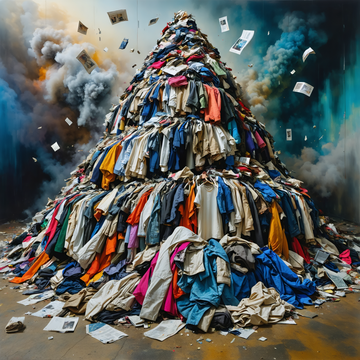
Have you ever looked at a sale rack and thought, “If this shirt still doesn’t sell, where does it go?” It sounds like a small question. But in Europe, it has become a very serious one. The European Commission says an estimated 4% to 9% of unsold textiles in Europe are destroyed before anyone wears them, creating around 5.6 million tonnes of CO2 emissions. (environment.ec.europa.eu)
Picture this. A shopper orders two black jackets online, keeps one, and sends one back. If the returned jacket is still fine, it may be moved to a discount channel and sold later. But that is not always the end of the story. EU and EEA reports say a large share of unsold products is exported out of Europe, often to Africa or Asia for reuse or recycling, and some later end up dumped or burned. In this policy debate, even recycling an unused item can count as destruction, because the product is thrown away before anyone ever uses it. (eea.europa.eu)
Now here is the turn. On February 9, 2026, the EU adopted new measures under its Ecodesign for Sustainable Products Regulation. For large companies, destroying unsold apparel, clothing accessories, and footwear will be banned from July 19, 2026. Medium-sized companies are expected to follow in 2030, while small and micro companies are exempt. Companies will also have to disclose discarded unsold goods in a standard format from February 2027. (environment.ec.europa.eu)
So the old fashion habit was simple: make too much, then make the leftovers disappear. The new rule says something different: count them, report them, and stop treating brand-new clothes like waste. Maybe the real future of fashion begins not in the shop window, but in what never gets worn. (environment.ec.europa.eu)