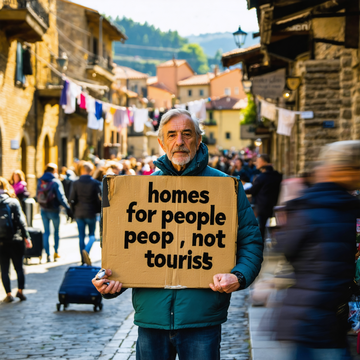
If Europe feels a little less welcoming to tourists these days, that feeling is real. But the anger is usually not about visitors as people. It is more about homes. Across Europe, many residents say short-term rentals, including Airbnb-style flats, have pushed rents up and made normal housing harder to find. On May 20, 2026, the European Commission said new EU transparency rules for short-term rentals had started to apply. In 2025, guests spent 951.6 million nights in these rentals, and the sector now accounts for about one quarter of tourist accommodation in the EU. Where countries use the new system, hosts must get registration numbers, platforms must display and check them, and authorities can ask for illegal listings to be removed. (single-market-economy.ec.europa.eu)
Local rules are getting tighter too. In Barcelona, the city said the licenses of 10,101 tourist apartments will end by November 2028. The mayor argues that these homes should go back to local residents. In Amsterdam, the basic rule is still a maximum of 30 rental nights a year for a home, but in parts of Centrum and De Pijp, that limit became 15 nights from April 1, 2026. (streetinsider.com)
Spain has also moved at the national level. In June 2025, a Spanish court left in place an order requiring Airbnb to block nearly 66,000 listings that authorities said broke local rules. And protests over housing and tourist flats have spread across Spain. So the question in Europe is changing. It is no longer only, “How do we welcome tourists?” It is also, “How do we keep cities livable for the people who call them home?” (apnews.com)