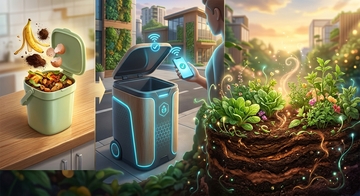
What happens to banana peels, coffee grounds, and old bread after we throw them away? In many cities, they go to landfills. There, food waste produces methane, a powerful greenhouse gas. Composting is a better choice because it turns food scraps into useful material for healthy soil. (epa.gov)
However, composting at home is not easy for everyone. People who live in apartments may not have enough space. Others may worry about bad smells or insects. To solve these problems, cities and small businesses are creating new food-scrap collection services.
In August 2026, Grand Rapids, Michigan, launched a service called Renew Grand Rapids. Residents can take their kitchen waste to seven special bins around the city. First, they sign up online or through an app. At a bin, they use Bluetooth on their phone to open it. People without smartphones can use a keypad. The bins are locked, so only registered users can put food scraps inside. The city collects the waste and makes compost from it. This compost will later be offered to residents for free. (grandrapidsmi.gov)
Private pickup services are also becoming more common across the United States. Customers usually receive a small bucket with a lid. They fill it with vegetable pieces, eggshells, coffee grounds, and other food scraps. Once a week, a worker collects the full bucket from outside the customer’s home or business and takes it to a composting site. This is especially helpful for people who cannot compost at home or travel to a drop-off point. (apnews.com)
These services show that food waste does not have to be useless trash. With a simple app, a secure bin, or a weekly pickup, yesterday’s dinner can help grow tomorrow’s plants.