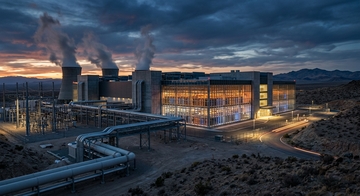
When we ask an AI tool a question, the answer may appear in seconds. However, the work happens in large buildings called data centers. These buildings contain thousands of powerful computers. They need electricity to process information, and they produce a lot of heat.
The International Energy Agency reported that data centers used about 485 terawatt-hours of electricity worldwide in 2025. This was 17% more than in 2024. It expects their electricity use to almost double by 2030, reaching about 3% of global electricity demand. AI-focused data centers are growing especially quickly. (iea.org)
Data centers also need cooling systems to stop their computers from getting too hot. Some systems use air, but others cool equipment by allowing water to evaporate. In 2023, data centers in the United States directly consumed about 66 billion liters of water. They also had an indirect water footprint of nearly 800 billion liters because many power stations use water while producing electricity. (eta-publications.lbl.gov)
This can become a serious local problem. A data center may use a small part of the world’s water, but it can put pressure on one town or region, especially during hot or dry weather. There is also a difficult choice: water cooling can save electricity, while air cooling may use less water but require more power.
Does this mean that AI is always bad for Earth? Not necessarily. New computer chips and software are becoming more efficient. According to the IEA, the electricity needed for one simple AI task has fallen greatly in recent years. However, people are using AI more often, and activities such as making AI videos can require far more energy than producing short text. (iea.org)
Data centers can reduce their impact by using cleaner electricity, recycled water, efficient cooling systems, and locations with enough water and power. (energy.gov) AI can be useful, but its environmental cost depends on how it is designed, powered, and used.