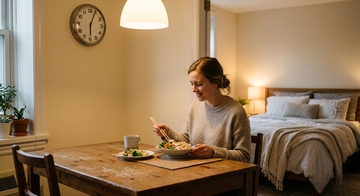
Dinner can change your sleep, especially when you eat very late. Your body needs time to work on food. A large meal near bedtime may cause indigestion. Indigestion means stomach pain or an uncomfortable, full feeling. This can make quiet sleep harder. (health.nih.gov)
Recent research also gives a useful message. In a small study, young women ate dinner earlier or near bedtime. After the later dinner, their sleep was shorter and less steady. Other studies have also connected later meals with poorer sleep. However, dinner is only one part of healthy sleep. Stress, light, exercise, and caffeine matter too. (pubmed.ncbi.nlm.nih.gov)
Try making dinner earlier and not too heavy. Choose simple foods, such as rice, vegetables, soup, fish, or chicken. Avoid a very large meal and caffeinated drinks late in the evening. Caffeine is a chemical that helps you stay awake. It is found in coffee, some teas, cola, and chocolate. (health.nih.gov)
For example, imagine you sleep at eleven. Eat a normal dinner earlier in the evening. Later, if you feel hungry, choose a small snack. Then notice how you sleep. A small dinner change may bring a calmer night.