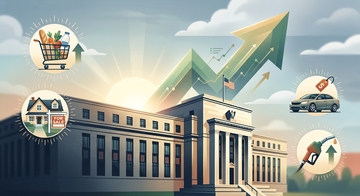
On March 16, 2022, the U.S. Federal Reserve raised its key interest rate for the first time since December 2018. It increased the target range from almost zero to 0.25–0.50 percent. The increase was small, but it marked an important change in U.S. economic policy. (federalreserve.gov)
At the beginning of the COVID-19 pandemic, the Fed had cut interest rates to support the economy. Low rates made it cheaper for people and companies to borrow money. This encouraged them to buy homes, cars, and other products. However, as the economy reopened, demand grew faster than supply. Factories and transport systems could not produce and deliver enough goods. Energy prices also rose, and Russia’s invasion of Ukraine added further pressure.
As a result, inflation became a serious problem. In February 2022, U.S. consumer prices were 7.9 percent higher than one year earlier. This was far above the Fed’s long-term goal of 2 percent. Food, gasoline, housing, and many other daily needs became more expensive. High inflation was especially difficult for families with lower incomes because essential items took up a large part of their budgets. (bls.gov)
At the same time, the job market had become strong enough to accept higher rates. The unemployment rate fell to 3.8 percent in February 2022, and many employers had difficulty finding workers. This showed that the economy no longer needed as much support as it had during the pandemic. (bls.gov)
Higher interest rates make loans more expensive. People may spend less, and businesses may delay new investments. When demand slows, prices usually rise more slowly. However, there is a risk: if rates rise too quickly, economic growth may weaken and unemployment may increase. The Fed therefore faced a difficult task—controlling inflation while trying to keep the job market strong.