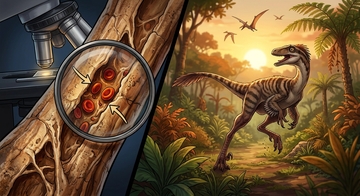
Scientists may have found the strongest evidence yet of blood-related material in a dinosaur fossil. The fossil belonged to Aratasaurus museunacionali, a meat-eating dinosaur that lived in what is now northeastern Brazil about 115 million years ago. It was around three meters long and was probably about four years old when it died. The study was published on November 2, 2026. (pnas.org)
The researchers studied bones from the dinosaur’s leg. Inside tiny channels that once carried blood, they discovered many small, round structures. These structures looked like red blood cells. More importantly, chemical tests found signs of heme inside them. Heme is part of hemoglobin, the protein that helps blood carry oxygen around the body. The chemical signs in the bone were different from those in the rock around it, suggesting that they came from the dinosaur itself. (pnas.org)
However, this was not fresh or liquid dinosaur blood. The cell-like structures had changed into minerals during fossilization. Researchers believe that a manganese mineral helped protect their shape and some of their chemical information. The dinosaur may also have been buried quickly in a place with little oxygen and many microbes. These special conditions could have slowed the destruction of its biological material. (curtin.edu.au)
Not every scientist is fully convinced. Some experts say that the structures may be too small to be dinosaur red blood cells. They agree that the fossil contains signs of heme, but more research is needed to confirm exactly what the structures are. Also, tests found no ancient DNA, so this discovery will not lead to a real-life “Jurassic Park.” Still, it may help scientists learn more about how dinosaurs used oxygen, produced energy, and lived millions of years ago. (abc.net.au)