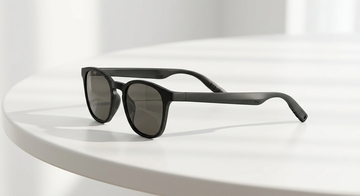
AI glasses usually include a camera that can take photos, record videos, and help AI understand what the wearer is seeing. However, cameras can make other people uncomfortable. They may not know whether they are being recorded. Now, several companies are trying a different idea: AI glasses without a camera.
A recent example is Ray-Ban Meta Audio. Meta began shipping these camera-free glasses in the United States on October 13, 2026, with prices starting at $349. A launch in Japan is planned for 2027. The glasses weigh 43 grams and can work for up to 12 hours on one charge. (about.fb.com)
Although they cannot take pictures or videos, the glasses still have useful functions. Wearers can listen to music and podcasts, make phone calls, and speak to an AI assistant without using their hands. Microphones and small open-ear speakers are built into the frame. Because there is no camera, the design is also slimmer and lighter than many other AI glasses.
Meta is not the only company following this trend. Halliday’s G2 glasses also have no camera. Instead, they use microphones, speakers, and a private display to show notifications, captions, translations, and AI answers. Halliday says the camera-free design makes the glasses lighter and more suitable for meetings and other situations where recording may be unwelcome. (hallidayglobal.com)
Removing the camera improves privacy, but it also limits what AI can do. The assistant cannot read a sign, recognize an object, or explain what the wearer is looking at. Users must describe their situation with words. In addition, camera-free glasses still use microphones, so people should check how their voice data is stored and used.
These products suggest that the future of AI glasses may not depend on cameras. For many people, a simple device for sound, calls, translation, and AI support could be more comfortable—and easier to wear every day.