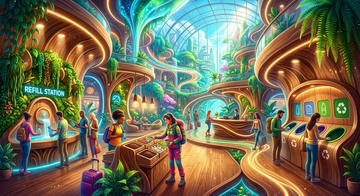
Hotels are trying to make travel more enjoyable without creating so much waste. They are changing how they serve food, provide bathroom products, and manage rubbish. “Zero waste” does not always mean producing no waste at all. Instead, it means avoiding unnecessary items, reusing materials, and recycling as much as possible.
One interesting example is HOTEL WHY in Kamikatsu, Tokushima. Kamikatsu became Japan’s first town to announce a zero-waste goal in 2003. At the hotel, guests choose the amount of soap, coffee, and tea they need instead of receiving many small packages. They can also visit the town’s Zero Waste Center and learn how to sort rubbish into many different groups. The experience encourages visitors to think before buying or throwing something away. (kamikatz.jp)
Large hotel companies are taking action, too. In 2025, Hilton’s Green Ramadan program worked with 45 hotels in 14 countries. Hotel teams used smaller portions, live cooking stations, and better signs for guests. During the program, the amount of food left on guests’ plates fell by 26 percent. More than 2.6 tons of food waste was avoided. (stories.hilton.com)
Hotels are also reducing plastic. AYANA Bali stopped providing single-use plastic bathroom products in its guest rooms. The resort says this change prevents about 52 tons of plastic waste each year. Accor has also reported that, by the end of 2025, 75 percent of its hotels had removed at least 90 percent of the single-use plastic products identified by the company. (ayana.com)
Guests have an important role. We can bring reusable bottles, take only the food we can eat, and avoid asking for clean towels every day. If hotels and travelers work together, a comfortable trip can also become a kinder trip for the planet.