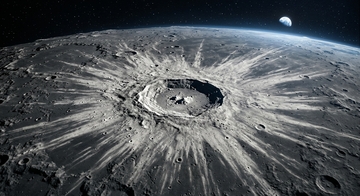
A huge crater has suddenly appeared on the Moon—or at least, it looks that way in new photographs. NASA scientists announced the discovery on September 16, 2026. The crater, called McGetchin, was created when a comet or asteroid hit the Moon sometime between April 11 and May 22, 2024. The space rock may have been as large as a three- to six-story building. (science.nasa.gov)
The crash made a hole about 222 meters wide and 43 meters deep. It is wide enough to cover two American football fields. Scientists believe that an impact this powerful may happen on the Moon only once every 100 years or even less often. McGetchin is also the largest new crater ever discovered in the solar system through a comparison of before-and-after images. (science.nasa.gov)
NASA scientist Robert Wagner noticed the crater on October 24, 2025, while checking images from the Lunar Reconnaissance Orbiter. This spacecraft has been traveling around the Moon for more than 17 years. Wagner used computer software to compare older pictures with newer ones. Most of the surface looked gray because it had not changed. However, one large, bright area with a dark ring immediately caught his attention.
Later, sharper photographs showed the new crater and long lines of material thrown out by the impact. Scientists also found that an area about 6.4 kilometers wide around the crater becomes about 9 degrees Celsius cooler than nearby land at night. The impact loosened the Moon’s surface material, so it cannot hold heat as well. This information may help engineers understand how future Moon vehicles will move across areas changed by impacts. (science.nasa.gov)
The discovery reminds us that the Moon is not a completely quiet and unchanging world. Even today, objects from space continue to reshape its surface.