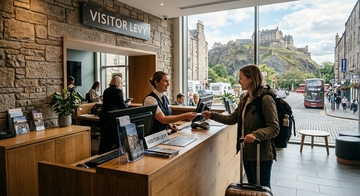
A growing number of places in the United Kingdom are introducing a “visitor levy,” often called a tourist tax. This is an extra charge connected to overnight accommodation, such as hotels, hostels, campsites, and holiday apartments. The money is collected from accommodation businesses and then used to support the local area.
Edinburgh became the first Scottish city to introduce such a levy. Since July 24, 2026, most visitors have had to pay an extra 5% of their accommodation cost. The charge applies only to the first five nights and does not include extras such as meals, drinks, or parking. The city plans to invest the money in services and facilities that both tourists and local people use. (edinburgh.gov.uk)
Wales has chosen a different system. Local councils can decide whether to introduce a fixed nightly charge. Cardiff will begin its scheme on April 1, 2027. The standard rate will be £1.30 per person per night, while people using campsites or shared hostel rooms will generally pay 75 pence. The income will help Cardiff improve the visitor experience and strengthen its tourism industry. (gov.wales)
England is also moving in this direction. On November 4, 2026, the government introduced the Visitor Levy Bill in Parliament. If it becomes law, mayors and other regional leaders will be able to charge a percentage of accommodation costs. Cheaper rooms will therefore have a lower charge than expensive hotels. Local leaders could spend the income on parks, public toilets, high streets, cultural events, security, and tourism promotion. (gov.uk)
Supporters say the levy will help popular destinations manage the pressure created by large numbers of tourists. However, some hotel and tourism businesses worry that higher prices may reduce visitor numbers and create more office work. The success of these schemes will depend on whether visitors can clearly see how their money improves the places they visit. (ukhospitality.org.uk)