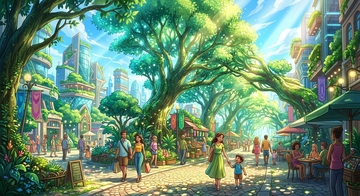
As summers become hotter, many cities are treating trees as important infrastructure, like roads, bridges, and water systems. Groups of trees in streets, parks, and other public spaces are often called “urban forests.” They protect people from extreme heat by creating shade and releasing water through their leaves. This natural process cools the surrounding air.
In September 2026, the United Nations Economic Commission for Europe published a new guide to help cities pay for urban forests. The guide says that planting trees is only the first step. Young trees need water and care, while older trees must be protected from disease, drought, and construction. Without long-term funding, many trees may die before they can provide enough shade. Some cities are testing different solutions. Leipzig, Germany, invites citizens to help pay for street trees, while Melbourne, Australia, uses special urban forest funds. (unece.org)
Research also shows that this investment can bring strong results. A 2026 World Resources Institute study examined 66 cities and found that a typical city could increase its tree cover by about eight percentage points. Around half of the possible new tree cover was located along streets. This is especially useful because people are often exposed to heat while walking, shopping, or waiting for public transportation. The same report says cities can receive more than three dollars in benefits for every dollar invested in urban trees. These benefits include lower cooling costs, cleaner air, better health, and less flooding. (wri.org)
However, cities should not plant trees only in rich neighborhoods. Lower-income areas often have fewer trees and face greater heat risks. Heat maps and local data can help governments find the places that need shade most.
An urban forest cannot grow overnight. If cities make up their minds to invest for many years, however, today’s small trees can become tomorrow’s life-saving shade.