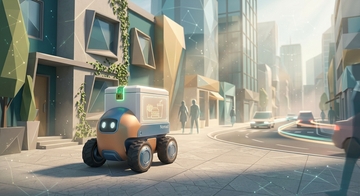
Imagine ordering a hamburger and seeing a small robot waiting outside your home. This is already happening in many cities. Sidewalk delivery robots carry restaurant meals in a locked box. They use cameras, radar, sensors, and artificial intelligence to find their way around people, cars, and other objects. If a robot has trouble, a remote worker can help it. (about.doordash.com)
The process is simple. A customer orders food through an app. A restaurant worker puts the meal inside the robot, and the robot travels along the sidewalk. Customers can follow its journey on their phones. When it arrives, they use the app or a special code to unlock the box and take out their food. The box stays locked during the trip, so other people cannot open it. (serverobotics.com)
Robot delivery is growing quickly. In August 2026, Serve Robotics started working with Wonder and Grubhub. Its service included over 100 participating restaurants in Chicago and nearly 200 in Los Angeles. Serve now has more than 2,000 robots in the United States and supports delivery from thousands of restaurants. Another company, Starship Technologies, reported that its robots had completed more than nine million deliveries around the world. In February 2026, Starship and Just Eat also began delivering hot restaurant food in Sunderland, England. (ir.serverobotics.com)
These electric robots may reduce short car trips, traffic, and pollution. They can also help restaurants make deliveries during busy hours. However, they still face challenges such as crowded sidewalks, road construction, and unexpected objects.
A robot cannot replace every delivery worker. Some trips are too long or difficult. Still, for a short journey from a local restaurant, a small robot may be an efficient and convenient choice. In the near future, meeting a friendly food robot outside your door may become a normal part of city life.