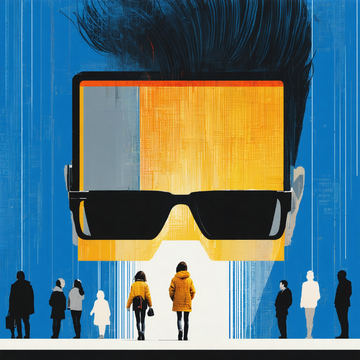
Australia has chosen a very strong answer to a difficult question. Since December 10, 2025, age-restricted social media platforms in Australia have had to take “reasonable steps” to stop people under 16 from creating or keeping accounts. According to Australia’s eSafety Commissioner, the rule applies to platforms such as Facebook, Instagram, TikTok, Snapchat, X, YouTube, Reddit, Twitch, Threads and Kick. Children do not get fined, but platforms can face penalties of up to A$49.5 million if they fail to act. (esafety.gov.au)
Why do many adults support this? They worry about cyberbullying, unhealthy comparison, and too much screen time. But the story is not simple. An eSafety study released in March 2026 found that some parents and children expected better sleep, more offline activity, and stronger face-to-face friendships. At the same time, others feared more loneliness, less emotional support, and the loss of online communities or long-distance friendships. Some children and parents also believed that many teenagers would simply find ways around the rules. (esafety.gov.au)
Australia’s move is now influencing other places. In France, lawmakers approved a bill in January 2026 to ban social media for children under 15, with the measure aimed at starting in September 2026. France had already passed a 2023 law that requires parental consent for social media accounts under age 15. In June 2025, Spain and 10 other European governments formally asked the European Commission to make age verification mandatory for minors on social media. The Commission later published child-safety guidelines and a prototype age-verification app under the Digital Services Act. (apnews.com)
The United States shows the other side of the debate. Some states have tried parental-consent rules, but courts have pushed back. In April 2025, a federal judge struck down Ohio’s law for under-16 users, saying it conflicted with free-speech rights. In Georgia, a similar law was challenged in court in May 2025. So the real question may not be only “Should under-16s use social media?” It may also be “Who should decide” — parents, companies, or the government? Australia’s experiment is now becoming a global test. (apnews.com)