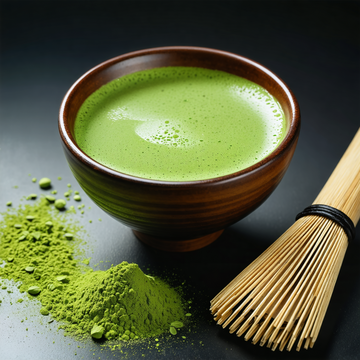
Matcha was once seen mainly as part of the Japanese tea ceremony, but now it is a global product. In 2025, Japan’s green tea exports reached 72.1 billion yen, almost double the 36.4 billion yen recorded in 2024. The United States was the biggest market, taking about 40.7% of export value, and the EU share also grew strongly. Osaka Customs reported that powdered green tea, the category that includes matcha, made up more than 80% of Japan’s green tea export value in January-October 2025. (maff.go.jp)
This boom is already changing what kind of tea Japan produces. MAFF says overall tea production has been declining for years, but tencha, the leaf used to make matcha, has been increasing. A MAFF support document shows national tencha production at 3,809 tons in 2022, and Reuters later reported that it had risen to 5,336 tons in 2024. Kyoto Prefecture says weaker demand for premium leaf tea and stronger demand for matcha at home and overseas are pushing farmers to switch quickly to tencha. In other words, more tea fields are being shaped by the needs of the global matcha market. (maff.go.jp)
But success brings new problems. Kyoto Prefecture warns that traditional hand-picked tencha and gyokuro are decreasing because skilled workers are aging and hard to replace. MAFF also notes that Japan’s tea farmers are getting older: people aged 65 or over made up 61% of core tea farmers in 2020. Reuters reported in July 2025 that extreme heat had hurt harvests in Kyoto and pushed prices to record highs. So the matcha boom may help the tea industry earn more money, but it also puts pressure on farmers, labor, and supply. (pref.kyoto.jp)
So, how will the global matcha boom change Japanese tea? Most likely, Japanese tea will become more export-focused, more powdered, and more international. That could save some tea farms and create new business chances. At the same time, Japan will need to protect the wider culture of tea, including sencha, gyokuro, and traditional Uji methods, so that “Japanese tea” does not become just one bright green image on social media. (pref.kyoto.jp)