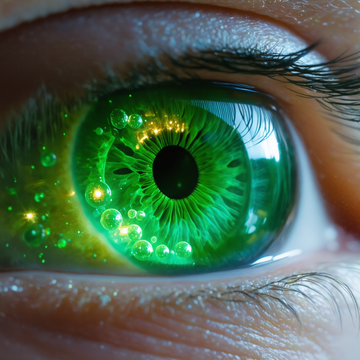
What if an eye drop made from spinach could help injured eyes heal themselves? In a study published on May 15, 2026, researchers reported that they took thylakoid grana—the light-harvesting structures inside plant chloroplasts—from spinach and turned them into tiny particles called LEAF, short for “light-reaction enriched thylakoid NADPH-foundry.” After these particles entered corneal cells, ordinary visible light drove the production of useful energy-rich molecules, especially NADPH and ATP. In other words, the scientists gave mammalian eye tissue a small, temporary piece of plant-style light chemistry. (sciencedirect.com)
The idea sounds like science fiction, but the medical target is very real. Dry eye disease happens when the eye cannot stay properly hydrated, and inflammation creates harmful reactive oxygen species. The eye is a clever place to test this method because, unlike many organs, it naturally receives visible light. According to the National Eye Institute, dry eye affects millions of Americans, and severe cases can damage the cornea. The NUS team designed LEAF to boost NADPH, a molecule that supports antioxidant defenses, without depending only on the cell’s usual damaged pathways. (nei.nih.gov)
The reported results were striking. In inflamed cells, LEAF restored NADPH levels within 30 minutes of light exposure. In tear samples from patients with dry eye disease, it increased NADPH by about twenty times and cut hydrogen peroxide—a damaging oxidant—by more than 95 percent. In preclinical mouse studies, eye drops containing LEAF, used under normal indoor light, brought corneal damage close to healthy levels within five days and even outperformed Restasis, a well-known prescription treatment. Safety tests over two months found no major adverse effects. (news.nus.edu.sg)
This does not mean people will soon become “photosynthetic.” Human cells are not turning into plant cells. But the study suggests something exciting: plant-derived nanoparticles may act like temporary “neo-organelles,” helping animal tissues use light in a new way. Human clinical trials are still needed, yet this cross-kingdom idea could open fresh paths not only for dry eye disease, but also for other conditions linked to oxidative stress. (sciencedirect.com)