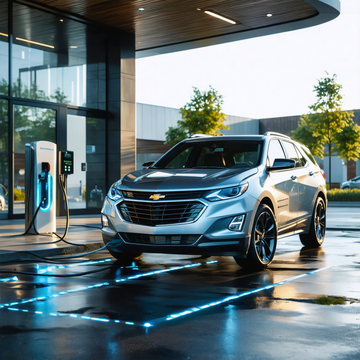
A few years ago, many drivers thought EVs were only for rich people. That is still partly true, but the picture is changing fast. In the United States, the average new EV sold for about $54,508 in March 2026. That is still higher than the overall average new-car price of $49,275, but the gap has fallen to about $5,800, the smallest gap in Kelley Blue Book’s data. So EVs are not “cheap” yet, but they are much closer to normal new-car prices than before. (coxautoinc.com)
One big reason is the battery. The IEA says lithium-ion battery pack prices fell 20% in 2024, the biggest drop since 2017. Lower lithium and other mineral prices helped, and strong competition also pushed costs down. Car companies are also giving bigger discounts: in March 2026, average EV incentives in the U.S. were 14.6% of price, nearly $8,000, more than double the industry average. Lower Tesla prices also helped pull the EV average down. (iea.org)
Another reason is that buyers have more choices now. At least some new EVs are in the mid-$30,000 range, not only in the luxury class. Chevrolet says the 2026 Equinox EV starts at $34,995 and offers an EPA-estimated 319 miles of range. That kind of model changes the image of EVs. It suggests that an electric car can now be a realistic option for everyday drivers, not just for early adopters or luxury buyers. (chevrolet.com)
Still, EV prices can move both down and up. In the U.S., the federal clean-vehicle credit for new cars is available only for vehicles acquired on or before September 30, 2025, so buyers in 2026 cannot count on that national discount. And the IEA warns that higher tariffs could raise battery costs again; it says a 25% tariff could cancel out the 20% battery-price drop seen over the past year. In short, EVs are becoming more affordable, but batteries, competition, and government policy will keep shaping the price. (irs.gov)