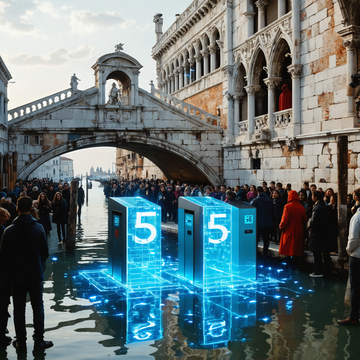
Venice’s 2026 access-fee expansion is striking not because the sum is ruinous, but because of what it symbolizes. From April 3 to July 26, 2026, the city will apply its “Contributo di Accesso” on 60 non-consecutive days, mostly in the spring and early summer high season, between 8:30 a.m. and 4:00 p.m. Day-trippers over the age of 14 who enter the ancient city generally pay €5 if they book at least four days in advance, or €10 if they book later. Overnight guests staying within the municipality and residents of the Veneto region do not pay, though they must still register on the portal, while Venice residents, workers, and students are excluded under the rules. (comune.venezia.it)
The policy has clearly moved beyond a one-off experiment. Venice first tested the system on 29 days in 2024, expanded it to 54 days in 2025, and has now stretched it to 60 days in 2026. According to municipal data for 2025, the 54-day trial produced 723,497 paid tickets and €5.42 million in revenue, almost double the 2024 results of 485,062 payments and €2.4 million. UNESCO’s recent state-of-conservation material also notes that the fee is now tied to a broader booking-and-monitoring system and that the money is meant to support maintenance, cleaning, and the quality of life of residents. In other words, Venice is trying to redefine tourism not as a natural force, but as something that can be governed. (live.comune.venezia.it)
That is where the argument becomes philosophically interesting. City officials frame the fee as a defense of urban livability in a fragile World Heritage site, but critics say it does little to address deeper problems such as housing and depopulation. Some opponents have even argued that the measure turns Venice into a kind of paid spectacle; former mayor Massimo Cacciari called it contrary to freedom of movement. So the real issue is larger than €5 or €10. It is whether an overvisited city has a right to protect itself by rationing access, and whether travelers can accept that the freedom to travel does not automatically include the freedom to overwhelm. (apnews.com)