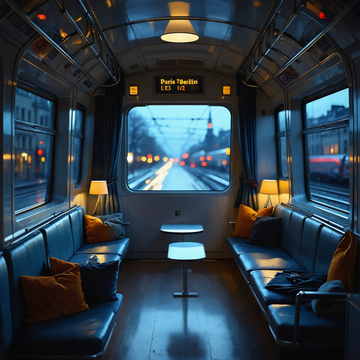
In spring 2026, one of Europe’s most famous overnight routes came back: the night train between Paris and Berlin. European Sleeper restarted the service on 26 March 2026. According to the company’s timetable, the train leaves Paris Nord at 18:03 and arrives at Berlin Hauptbahnhof at 09:02 the next morning. It runs three times a week from Paris and stops at Aulnoye-Aymeries, Mons, Brussels, and Liège on the way. European Sleeper also says the route is expected to continue beyond Berlin to Hamburg from July 2026. (europeansleeper.eu)
Why are people so interested in this train? One reason is the idea of slow travel. Slow tourism means not rushing from one famous place to another. Instead, travelers take their time, enjoy the journey, and connect more deeply with local culture. EU-backed slow tourism projects describe this style of travel as more meaningful for visitors and better for local communities and small businesses. A night train fits this idea perfectly. You can read, talk, watch the landscape change, sleep on the train, and wake up in the center of a new city. The trip becomes part of the adventure, not just the time between two airports. (eu-cap-network.ec.europa.eu)
There is also a green reason behind the new interest in night trains. The European Commission says it wants rail travel to become more convenient, better connected, and more sustainable across Europe, and it is supporting pilot projects for cross-border rail. European Sleeper says its Brussels–Prague night train can produce up to eight times less CO₂ than flying the same route. Night trains still face problems, such as complex international rules and limited rail capacity. Even so, the return of the Paris–Berlin sleeper suggests something important: in Europe, more people are choosing travel that is slower, calmer, and richer in experience. (commission.europa.eu)