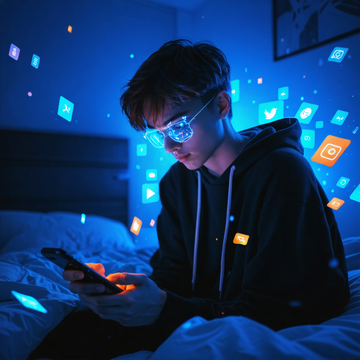
For many teenagers, the day’s news does not begin with a newspaper or a TV anchor. It begins with a scroll. A new Media Insight Project poll reported by AP on April 30, 2026 found that 57% of U.S. teens ages 13 to 17 get news from social media at least once a day, compared with 36% of adults. The same share of teens, 57%, said they get information on national issues and events from influencers or independent creators at least sometimes. About 4 in 10 teens also get news daily from search, and about 2 in 10 do so from AI chatbots. (apnews.com)
Why is this happening? One simple reason is that teens already live on these platforms. Pew Research Center reported on December 12, 2024 that 90% of U.S. teens use YouTube, around six in ten use TikTok and Instagram, 55% use Snapchat, and nearly half say they are online almost constantly. So news now appears in the same places as music, games, fashion, memes, and messages from friends. Reuters Institute’s Digital News Report 2024 also says mainstream media are strongly challenged on TikTok, Instagram, and YouTube by creators and other online personalities, especially for younger users. It adds that many young people use a wider idea of “news,” including sport, food, fitness, fashion, and travel. (pewresearch.org)
Still, this does not mean teens believe everything they see. The AP report says only 12% of teenagers have “a great deal of confidence” in information from influencers, and only 11% say the same about AI. In other words, many teens are curious, but careful. They may like creators because they feel more direct, personal, and authentic than traditional news brands, but they are still aware that online information can be weak or wrong. This shift matters because it shows that the future of news may be less formal, more visual, and much more connected to everyday online life. (apnews.com)