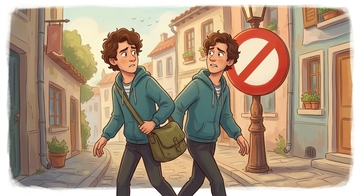
What if your favorite app asked one small question before it opened: “Are you 16 yet?”
That is not a joke in Australia now. Since December 10, 2025, many age-restricted social media platforms have had to take reasonable steps to stop Australians under 16 from making or keeping accounts. The rule is for the platforms, not for children or parents, and companies can face penalties of up to 49.5 million Australian dollars if they do not follow the law. (infrastructure.gov.au)
Now imagine Yui, a 15-year-old after school. She wants to watch videos, talk with friends, and check a study group on her phone. Under Australia’s new rule, some social media accounts may be blocked. But not everything disappears. Messaging apps, online games, and services mainly for education or health can still be allowed. Australia’s eSafety agency says platforms such as Instagram, TikTok, Snapchat, X, YouTube, Reddit, and Facebook are among the age-restricted services. (infrastructure.gov.au)
Here is the turn in the story. Australia is not the only place worried about children online. In the European Union, leaders are building a privacy-friendly age-check tool, and they want countries to roll it out by the end of 2026. In the UK, there is still no national under-16 social media ban, but the government is studying ideas such as a ban, app curfews, and time limits. (digital-strategy.ec.europa.eu)
And this is already changing real life. On January 16, 2026, Australia’s eSafety Commissioner said platforms had removed access to 4.7 million under-16 accounts across the country by mid-December 2025. So now the big question is not only, “Should kids use social media?” The bigger question is, “How do we keep children safe online without closing every door?”
Maybe that is the new internet rule for families: not no internet, but safer internet, and wiser choices before we tap.