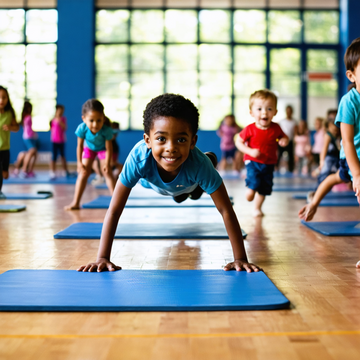
In the United States, the “Presidential Fitness Test” is no longer just a memory from old gym classes. President Donald Trump formally reestablished it by executive order on July 31, 2025, and the administration revived the Presidential Physical Fitness Award on May 5, 2026. The current version asks students to meet age- and sex-based benchmarks in three areas: core strength, cardiorespiratory fitness, and upper-body strength. A child can choose, for example, between curl-ups or a plank, a one-mile run or a 20-meter beep test, and push-ups or pull-ups. (whitehouse.gov)
Supporters say this is a welcome return of discipline and ambition. But the harder question is whether testing children actually makes them healthier. On that point, the evidence is not very encouraging. A 2024 study using nationally representative U.S. data found that children who received school-based fitness awards did not have significantly higher odds of meeting physical-activity guidelines than those who did not. In other words, earning a badge or certificate may recognize fitness, but it does not automatically create healthier habits. (shapeamerica.org)
That helps explain why the Obama-era program changed direction in 2012. The old performance-based model was replaced by the Presidential Youth Fitness Program, which emphasized personal goals and lifelong health rather than competition with classmates. Current CDC guidance also suggests caution: if schools use fitness assessments, they should protect students’ dignity, keep results confidential, and never use test scores as report-card grades, partly because performance is shaped not only by effort but also by genetics and physical maturation. (apnews.com)
So what does improve children’s health? The CDC’s more consistent answer is not a single annual test but a broader system: quality physical education, recess, classroom movement, after-school activity, and family support. Children and adolescents need at least 60 minutes of physical activity every day, and schools can help by making movement part of ordinary life, not just a high-pressure moment in front of peers. (cdc.gov)
A recent CDC policy analysis adds one more complication: many states are not well prepared to implement high-quality fitness testing at scale. Nearly half had no fitness-testing requirement or recommendation, and only 5 states required the federally recommended 150 minutes of elementary physical education per week. That means the revived test may produce headlines, but unless it is tied to more PE time, better instruction, and a less humiliating school culture, it is unlikely to make American children much healthier on its own. (cdc.gov)