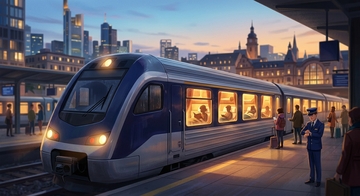
For many years, Europe’s night trains seemed to be disappearing. Low-cost airlines offered cheap flights, while fast daytime trains became more popular. However, concern about climate change and a growing interest in slower travel have helped night trains return. Rail travel usually creates far fewer emissions than air travel, so many passengers see it as a greener choice. (eea.europa.eu)
Austria’s ÖBB is one of the main companies behind this comeback. Its Nightjet and EuroNight services connect cities such as Vienna, Amsterdam, Brussels, Berlin, Zurich, Venice, and Rome. Passengers can choose a normal seat, a couchette—a simple bed in a shared room—or a more comfortable sleeping cabin. Some modern trains even have small cabins for solo travelers and private rooms with a toilet and shower. (nightjet.com)
Smaller companies are also opening routes. European Sleeper runs trains between Brussels and Prague three times a week. On March 26, 2026, it brought back the Paris–Berlin night train after the earlier service had ended in December 2025. It is also scheduled to begin a Brussels–Cologne–Zurich–Milan service on September 9, 2026. In northern Europe, Snälltåget operates a seasonal night train connecting Berlin, Copenhagen, and Stockholm. (europeansleeper.eu)
Night trains offer a special experience. You can leave one city in the evening, sleep while the train crosses borders, and wake up in another country. You may also save the cost of a hotel and arrive near the city center.
Still, the revival faces problems. International tickets can be difficult to book, sleeping cars are expensive, and railway work may cause delays. In May 2026, the European Commission proposed new rules to make cross-border booking easier and improve passenger protection. If these plans succeed, traveling across Europe by night could become simpler and more attractive. (commission.europa.eu)