What can a sky full of tiny dots really tell us?
Imagine you get home at night, open a map app, and see pins everywhere. Each pin says, “Look here.” NASA’s new TESS sky map feels like that. But these pins are not stores or stations. They are worlds beyond our solar system. In a NASA story published on May 13, 2026, the agency showed its most complete TESS night-sky mosaic so far, built from 96 parts of the sky observed between April 2018 and September 2025. (science.nasa.gov)
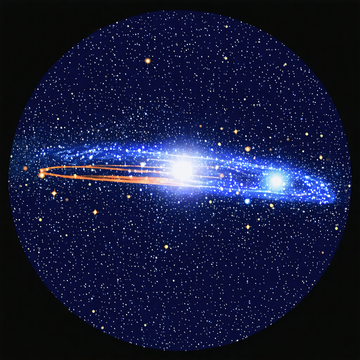
Now here is the interesting part. People may say “6,000 planet candidates,” but the picture is a little more exact. In that mosaic, TESS marked 679 confirmed exoplanets in blue and 5,165 candidates in orange. The bright band across the middle is our Milky Way, and the black spaces are places TESS had not imaged yet. So the map is not only about planets. It also shows where TESS has looked, and where it still has work to do. (science.nasa.gov)
How does TESS find these worlds? It watches huge areas of the sky for about a month at a time. Then it looks for small, regular dips in a star’s light. That dip can happen when a planet passes in front of the star. A candidate is like a pin on your phone map. It means, “This looks promising. Check again.” (science.nasa.gov)
And the story is still moving. On May 4, 2026, NASA said TESS had already reached 885 confirmed planets and more than 7,900 candidates. (science.nasa.gov)
So when you look up at the night sky, maybe do not think of empty darkness. Think of a map still being filled in, one small dip of starlight at a time.