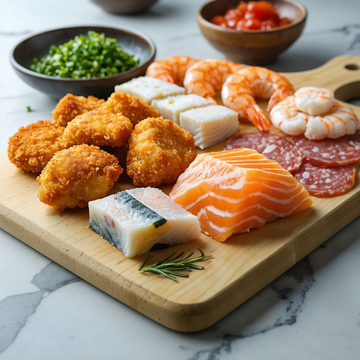
In the United States, some seafood companies are trying a surprising idea: make fish look more like meat. At Seafood Expo North America in Boston in March 2026, businesses showed tuna nuggets made to taste like fried chicken, shrimp burgers, salmon snack sticks, salmon salami, and even rib-like cuts from tambaqui, a large freshwater fish from the Amazon. The idea is simple: many Americans think fish smells too strong, has too many bones, or feels unfamiliar, so companies are turning seafood into foods people already know. (apnews.com)
This trend is also connected to health and eating habits. NOAA says seafood consumption in the U.S. was 19.1 pounds per person in 2023. At the same time, U.S. dietary guidance recommends that adults eat at least 8 ounces of seafood each week. That means many people still are not eating as much seafood as health experts suggest. For seafood companies, this is a big chance. If fish comes as nuggets, sliders, or chips, it may feel easier for busy families, children, and people who usually avoid seafood. Some market experts quoted by AP even said these familiar shapes could become a good “entry point” for new seafood eaters. (fisheries.noaa.gov)
Still, not everyone loves the idea. Some seafood advocates say fish should look like fish, not like highly processed snacks. They worry that people may move farther away from simple, recognizable seafood and from the fishing communities behind it. Even so, this new “hidden seafood” tells us something interesting about American food culture: taste is important, but so are convenience, fun, and familiarity. A salmon stick may not look like traditional seafood, but it might help one more person say, “OK, I’ll try fish.” And sometimes, that first bite is where a new habit begins. (apnews.com)