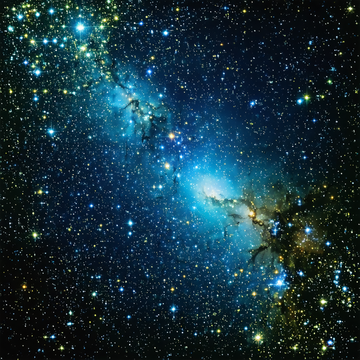
On May 13, 2026, NASA shared TESS’s most complete view of the night sky so far. The giant mosaic was built from 96 observing sectors collected between April 2018 and September 2025. Across the picture, nearly 6,000 dots mark places where TESS found confirmed or possible exoplanets. NASA says the image includes 679 confirmed planets and 5,165 candidates from that period. You can also see the bright band of the Milky Way and the Large and Small Magellanic Clouds, while a few dark areas show parts of the sky TESS has not imaged yet. (science.nasa.gov)
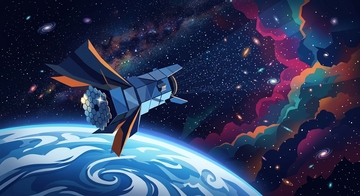
TESS, short for Transiting Exoplanet Survey Satellite, launched on April 18, 2018 and is still in its extended mission. Using four cameras, it watches one large area of sky for about a month at a time. Scientists look for tiny drops in a star’s brightness, which can happen when a planet passes in front of it. Unlike Kepler, which studied a smaller patch of space in great detail, TESS surveys almost the whole sky and focuses on nearby, bright stars. That matters because bright stars are easier to study later with ground telescopes and with space observatories such as Webb. (science.nasa.gov)
The search is growing fast. NASA’s new mosaic shows TESS results only up to September 2025, but the NASA Exoplanet Archive listed 6,287 confirmed exoplanets in total on May 14, 2026. Of those, 893 were confirmed TESS planets, and the mission had 7,931 TESS candidates listed on May 7, 2026. These numbers show how quickly the field changes: every few weeks, new worlds can move from “candidate” to “confirmed.” (exoplanetarchive.ipac.caltech.edu)
Even more exciting, TESS is now helping astronomers find planets in new ways. In a NASA report published on May 4, 2026, researchers used TESS data from eclipsing binary stars and uncovered more than two dozen exoplanet candidates that the mission might not have found with its usual method alone. So TESS is not only taking beautiful pictures of the sky. It is also opening new paths in the search for distant worlds—and maybe, one day, signs of life beyond Earth. (science.nasa.gov)