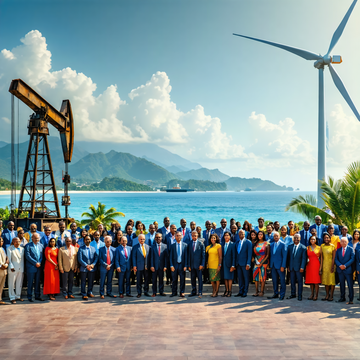
In Santa Marta on Colombia’s Caribbean coast, an unusual climate meeting has begun: the First Conference on Transitioning Away from Fossil Fuels, held from April 24 to 29, 2026 and co-hosted by Colombia and the Netherlands. More than 50 countries are taking part, along with subnational governments, academics, workers, Indigenous representatives, and civil society groups. The goal is simple to say but hard to achieve: move beyond oil, gas, and coal in a way that is “just, orderly and equitable.” Unlike the familiar U.N. climate summits, this gathering is designed as an action-focused platform, not a new treaty negotiation or a replacement for the COP process. (apnews.com)
Why does this matter? At COP28 in Dubai in 2023, nearly 200 countries agreed for the first time to “transition away from fossil fuels in energy systems.” Santa Marta is an attempt to turn that famous phrase into practical roadmaps. On the conference’s opening day, participants also launched a new international science panel to help governments plan the shift with advice from experts in climate, economics, and technology. In other words, the debate is moving from slogans to implementation. (iea.org)
But the biggest question is fairness. Colombia itself shows the problem clearly. Its government speaks boldly about a post-fossil-fuel future, yet the country still depends heavily on oil and coal exports. The OECD says oil made up 32% of Colombia’s exports and coal 18% in 2023, while AP notes that crude still provides a significant share of government revenue and foreign income. Many developing countries face the same dilemma: they are asked to move faster, but they often have high debt, limited public money, and workers whose jobs are tied to fossil fuels. A “just transition” therefore means more than clean energy. It also means new jobs, retraining, social protection, and real investment in local communities. (oecd.org)
So, can a just transition really happen? Possibly—but only if governments match ambition with money and policy change. The Santa Marta agenda includes economic dependence, fossil-fuel subsidies, clean energy investment, and legal barriers such as investor-state dispute settlement. The conference will not create binding commitments, so its real value will depend on what comes next. If countries leave with serious plans, financing ideas, and political courage, this meeting in Colombia could become the moment when the world finally began planning its exit from fossil fuels in earnest. (transitionawayconference.com)