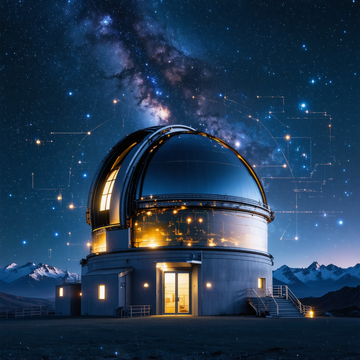
On June 30, 2026, the Vera C. Rubin Observatory in Chile officially began its main project, the Legacy Survey of Space and Time, or LSST. For the next ten years, Rubin will watch the southern sky again and again, making a huge time-lapse movie of space. Scientists say this survey will create the most complete record ever made of a changing universe. (rubinobservatory.org)
Rubin is special because it combines speed, power, and a very wide view. Its camera has 3,200 megapixels, making it the largest digital camera in the world. The observatory can take a new detailed image about every 40 seconds, and it will return to each area of the sky about 800 times over ten years. This means Rubin can catch both slow changes, such as the growth of galaxies, and fast events, such as exploding stars. (rubinobservatory.org)
Even before the full survey started, Rubin showed amazing results. On June 23, 2025, it released its first images. In a little over 10 hours of test observing, it captured millions of galaxies and Milky Way stars, plus thousands of asteroids. In that short time, Rubin also found 2,104 new asteroids, including seven near-Earth asteroids, though officials said they are not dangerous. These early images showed that Rubin is not only a powerful space camera but also a strong tool for studying our own Solar System. (rubinobservatory.org)
Another exciting feature is Rubin’s alert system. The observatory sent out its first scientific alerts on February 24, 2026, and announced the milestone on February 25. On that first night, it produced 800,000 alerts about changes in the sky, such as supernovae, variable stars, and moving objects. In the future, Rubin may send up to seven million alerts in one night, and each alert can be created within two minutes after an image is taken. For scientists, this “10-year movie” could open a new age of discovery. (rubinobservatory.org)