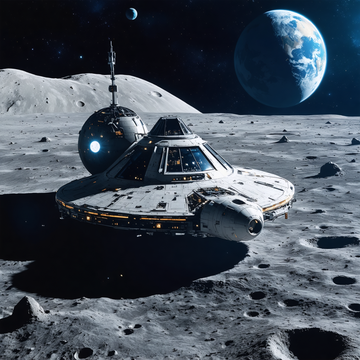
Will humans really return to the Moon? After Artemis II, the answer looks much more serious than it did a few years ago. NASA’s Artemis II mission launched on April 1, 2026, sent four astronauts around the Moon, and brought them safely back to Earth on April 10 after a nearly 10-day journey. During the flight, the crew reached 248,655 miles from Earth, farther than any humans had ever traveled before. NASA’s first post-flight checks also suggest that Orion, the SLS rocket, and major ground systems performed largely as expected. (nasa.gov)
But Artemis II does not mean astronauts will step onto the lunar surface immediately. Under NASA’s revised plan announced in early 2026, Artemis III is now designed as a 2027 mission in low Earth orbit to test docking and operations with commercial lunar landers and new moon spacesuits. The first Artemis landing is currently assigned to Artemis IV, targeted for early 2028. NASA says this extra “test before you land” step should reduce risk and make later missions more reliable. (nasa.gov)
This is why the new Moon race feels different from the old Apollo race. It is not simply the United States against one rival. NASA is working with private companies and a large international coalition; as of April 23, 2026, 63 nations had signed the Artemis Accords. At the same time, China says it is pressing ahead with a crewed lunar landing by 2030, and its Chang’e-6 mission achieved an unprecedented far-side sample operation in 2024. In other words, the competition is now scientific, political, and commercial all at once. (nasa.gov)
So the most interesting question is no longer “Will humans go back?” Artemis II has already made that idea feel real again. The harder question is whether space agencies and companies can build a system that is safe, repeatable, and sustainable. If NASA’s updated timeline holds and China keeps moving toward 2030, the late 2020s may be remembered as the moment the Moon stopped being history and became the future again. (nasa.gov)