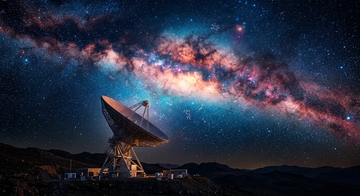
The Vera C. Rubin Observatory is changing astronomy from slow photography into something closer to live reporting. On February 24, 2026, it began sending scientific alerts about things that had just changed in the sky: moving objects, stars that suddenly brightened, and possible exploding stars. Rubin compares each new image with older “template” images and can send an alert within two minutes. On its first night, it produced about 800,000 alerts, and the system is expected to grow to as many as seven million alerts per night. (rubinobservatory.org)
That is why Rubin’s newest asteroid result matters so much. On April 2, 2026, researchers announced that early Rubin data had revealed more than 11,000 previously unknown asteroids, a result confirmed by the Minor Planet Center. The group includes 33 new near-Earth objects and about 380 trans-Neptunian objects beyond Neptune. None of the newly discovered near-Earth objects is considered dangerous to Earth. Still, the speed is astonishing: these discoveries came from only about a month and a half of observations, and Rubin scientists say that once the main survey begins later in 2026, the observatory may find a similar number every two to three nights in its early years. (washington.edu)
So what will change? First, planetary defense should become stronger. Rubin is expected to find nearly 90,000 additional near-Earth objects during full operations, which means more chances to detect risky bodies early and track them carefully. Second, our map of the Solar System should become far more complete. Among the latest discoveries are very distant icy worlds on huge, stretched orbits. Objects like these can help scientists test ideas about how the planets moved long ago, and even whether another large planet may still be hiding in the far outer Solar System. (washington.edu)
In short, the 11,000 new asteroids are not just extra dots in a catalog. They show that Rubin can watch the sky as a changing, active place. For scientists, that means faster follow-up and better data. For everyone else, it means the era of real-time space observation has truly begun. (rubinobservatory.org)