On July 26, 2026, UNESCO added the Ancient Capitals of Asuka and Fujiwara in Nara Prefecture to the World Heritage List. The heritage area has 19 parts, including palace ruins, Buddhist temple sites, government offices, and ancient burial mounds. These places show how Japan developed a central government between 588 and 710. They also show cultural connections with China and the Korean Peninsula. (bunka.go.jp)
A good journey begins near Asuka Station. After a short bus ride, visitors can start walking from the Nara Prefecture Complex of Man’yo Culture. From there, it takes only a few minutes to reach the Sakafuneishi Ritual Site. Then, walk to the Asuka Palace Site and the Asuka Pond Garden Site. Although most of the original buildings have disappeared, signs and displays help visitors imagine the ancient capital. (asuka-fujiwara.jp)
The next stop is Asuka-dera Temple. UNESCO describes it as Japan’s first Buddhist temple. This makes it an important place for understanding how Buddhism became part of Japanese culture. After visiting the temple, continue to the Asuka Water Clock Site. A water clock was used to measure time, showing that the people of ancient Asuka had advanced knowledge and technology. (whc.unesco.org)
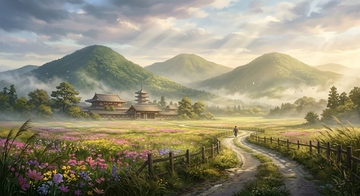
The final part of the walk is longer. It takes about 30 minutes to reach the Fujiwara Palace Site. Fujiwara was Japan’s capital from 694 to 710, and its city plan influenced later capitals such as Nara and Kyoto. Today, the palace site is a wide, peaceful field surrounded by the Three Mountains of Yamato. Seasonal flowers add color to the landscape. (whc.unesco.org)
Walking through Asuka and Fujiwara is not like visiting a modern museum. You must use your imagination. However, quiet roads, green fields, and distant mountains make the past feel surprisingly close.