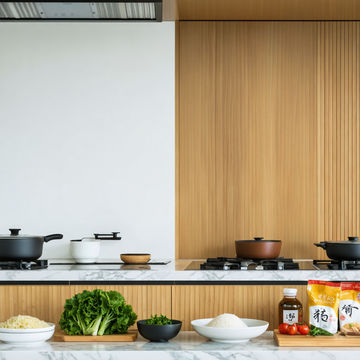
In Japan, eating at home is becoming popular again, and the main reason is easy to understand: people want to save money. Japan’s 2025 Family Income and Expenditure Survey shows that households with two or more people spent an average of ¥94,895 a month on food. That was 5.5% higher than a year earlier in nominal terms, but 1.2% lower in real terms, which means prices rose faster than actual buying power. Food also took 28.6% of total household consumption, so a bigger share of family budgets was going to meals. Japan’s 2025 consumer price index also shows food prices rising 6.8% from the previous year. (stat.go.jp)
Rice helps explain why many families feel this pressure so strongly. In the same 2025 survey, spending on cereals rose 18.7% in nominal terms. Even in April 2026, after nine straight weekly declines, the average supermarket price of rice was still about ¥3,873 for 5 kilograms. These figures suggest that households are thinking more carefully about what to cook, how much to buy, and how to avoid waste. Cooking at home can mean simpler menus, larger batches, and smarter use of leftovers. It is not only about tradition or health now; it is also about control. (stat.go.jp)
Still, today’s “home meal” does not always mean making everything from scratch. A recent USDA report says demand in Japan remains strong for meal kits with pre-cut ingredients and ready-made seasonings, especially among busy dual-income families, older people, and single-person households. The same report says the home-delivery meal-kit market is expected to exceed $1.9 billion in fiscal 2024, while the frozen food market reached $12.5 billion in 2023 after three straight years of growth. So the new home-cooking trend is not a simple return to the past. It is a modern style of eating: part savings plan, part convenience, and part everyday creativity in the kitchen. (apps.fas.usda.gov)