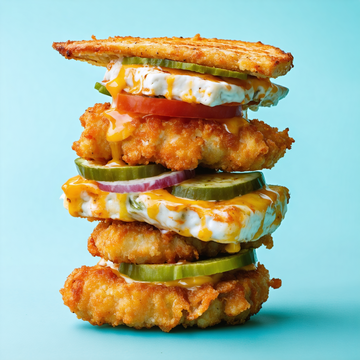
In the United States, seafood companies have begun selling fish in forms that borrow the visual language of meat: tuna “nuggets,” shrimp burgers, salmon snack sticks, salmon salami, and even rib-like cuts from Brazilian tambaqui. The trend was highly visible at Seafood Expo North America in Boston in March 2026, where exhibitors repeatedly emphasized that their products were convenient, familiar, and, above all, not especially “fishy.” (apnews.com)
Why this strategic camouflage? Because Americans still eat surprisingly little seafood. NOAA says U.S. per-capita seafood consumption was 19.1 pounds in 2023, while the latest CDC analysis found that only 24.3% of adults were eating seafood at least twice a week in August 2021–August 2023, despite federal guidance recommending about 8 ounces weekly. Globally, by contrast, apparent consumption was about 20.7 kilograms per person in 2022—roughly 45.6 pounds—according to the FAO. (fisheries.noaa.gov)
That gap helps explain the industry’s rebranding. FMI, the food industry association, reported in April 2026 that just 10% of U.S. shoppers account for 40% of seafood purchases. It also noted that some Gen Z consumers embrace seafood—often through sushi—while almost half still do not buy it regularly. In other words, the category has a small core audience and a large outer ring of hesitant consumers. Turning fish into burgers, tenders, chips, or charcuterie is an attempt to lower the psychological barrier: fewer bones, less odor, less uncertainty, and a format Americans already know how to cook, snack on, or eat on the move. (fmi.org)
Yet the strategy is not without detractors. Critics quoted by AP argue that when fish no longer looks like fish, consumers may lose sight of where it came from and how it was caught, while heavily processed products can favor industrial scale over local fishing communities. That tension makes the moment especially revealing: globally, aquatic food production is expanding, with aquaculture surpassing capture fisheries for the first time in the FAO’s 2024 report, but in America the central challenge is still cultural. The industry is not merely selling protein; it is translating seafood into the grammar of meat. (apnews.com)