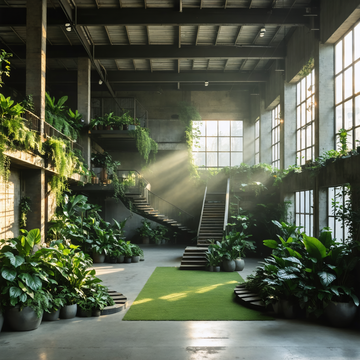
By May 2026, the EUmies Awards were sending a clear message: Europe’s most exciting architecture is often not about building from scratch, but about transforming what already exists. The official EUmies Awards Days in Barcelona, held on 11–12 May 2026, were explicitly organized around “reuse as a critical lens,” with discussions on reuse as economy, cultural production, adaptability, and transformation. That framing matters. It suggests that repair and reuse are no longer side topics in architecture; they are moving to the center of the conversation. (eumiesawards.com)
The winners made that shift impossible to miss. On 16 April 2026 in Oulu, the Architecture Prize went to Charleroi Palais des Expositions in Belgium, a renovation of a 1950s convention centre, while the Emerging Prize went to Temporary Spaces for the Slovenian National Theatre Drama in Ljubljana, which adaptively reuses a former industrial hall as a temporary national theatre. In other words, both top prizes celebrated projects that worked with existing buildings instead of erasing them. (eumiesawards.com)
The finalist list reinforced the same idea. In Terrassa, H ARQUITECTES transformed the old Vapor Marquès warehouses into an inclusive center, introducing timber structures, skylights, and passive systems while respecting the original character of the site. In Arles, Assemble, Atelier Luma, and BC architects & studies converted a 19th-century train depot into a research facility using local Camargue resources such as rice husks, algae, salt, and sunflower-based materials. In Dubrovnik, the Gruž Market project restored heritage structures and removed later additions rather than treating the past as an obstacle. (eumiesawards.com)
What makes this feel revolutionary is its quietness. The jury described the seven finalists as works that balance innovation with sensitivity to context and improve everyday life. Even the broader shortlist of 40 works across 18 countries was presented as evidence of an architectural culture increasingly shaped by sustainability, responsibility, and the thoughtful transformation of existing structures. The future imagined by the EUmies Awards 2026 is not flashy demolition followed by novelty. It is more mature, and perhaps more hopeful: keep, repair, reinterpret, and let old spaces live again. (eumiesawards.com)