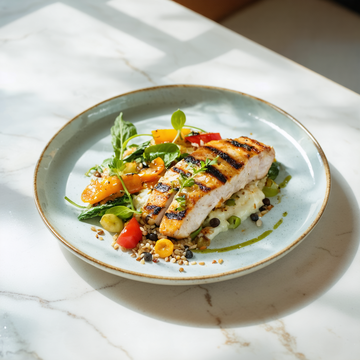
In the United States, GLP-1 medicines such as Wegovy, Zepbound, Ozempic, and Mounjaro are starting a quiet food revolution. Because these drugs often reduce appetite, many users no longer want huge restaurant portions. Instead, they look for meals that are smaller but more nutritious—especially dishes high in protein and fiber. AP reported in March 2026 that restaurants are adapting to this shift, and a separate AP report in January 2026 showed that supermarkets are also joining the trend with foods labeled “GLP-1 Friendly.” (apnews.com)
One of the clearest examples is Cuba Libre Restaurant & Rum Bar in Philadelphia and other cities. After hearing from customers on GLP-1 drugs, the company created a five-item “GLP-Wonderful” menu. AP reported that its regular pollo asado has nearly 1,000 calories, while the new version is about 400 calories and still focuses on protein and fiber. Large chains are making similar moves. Olive Garden rolled out a seven-item “Lighter Portions” menu nationwide in January 2026, and P.F. Chang’s began offering medium-sized portions in late 2025. (apnews.com)
Food companies see the same opportunity. Nestlé launched its Vital Pursuit brand for GLP-1 users with “portion-aligned” frozen meals that are high in protein, provide fiber, and include essential nutrients; the brand later expanded nationwide. Nestlé says the meals are built around smaller appetites, and many products offer at least 20 grams of protein. Smoothie King also introduced a nationwide GLP-1 Support Menu in October 2024, featuring smoothies with 20 grams or more of protein, fiber, and no added sugar. (nestleusa.com)
What makes this trend especially interesting is that it may last even beyond the drug boom. AP reported that 77% of Vital Pursuit sales come from households where no one uses GLP-1 medicine, suggesting that “small but powerful” meals appeal to many people, not only patients. Research released by the National Frozen & Refrigerated Foods Association in March 2025 also found that 78% of GLP-1 users eat smaller portions and 46% are more likely to buy frozen foods with high protein. In other words, the future menu may be less about eating more—and more about eating smarter. (ap.org)