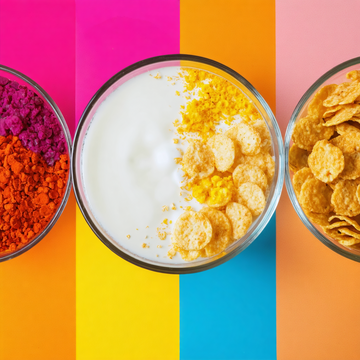
For generations, the American cereal aisle has looked almost theatrical: bright loops, neon marshmallows, and cartoonish colors designed to catch a child’s eye before breakfast even begins. That visual style is now under real pressure. On April 22, 2025, the U.S. Food and Drug Administration and the Department of Health and Human Services announced a national push to phase out petroleum-based synthetic dyes, and the FDA had already revoked authorization for Red No. 3 in food in January 2025, giving food manufacturers until January 15, 2027 to reformulate products that still use it. (fda.gov)
The biggest cereal companies are moving. General Mills announced on June 17, 2025 that it would remove certified colors from all U.S. cereals by summer 2026 and from its full U.S. retail portfolio by the end of 2027. In an update published on April 15, 2026, the company said all of its K-12 school foods were already being made without certified colors as of March 2026. WK Kellogg, the maker of Froot Loops and Apple Jacks, has also said it will remove artificial dyes from its breakfast cereals by the end of 2027, and has noted that 85% of its cereal sales already come from products without FD&C colors. (investors.generalmills.com)
Retailers are accelerating the change even further. On February 27, 2026, Target announced that by the end of May 2026 every cereal it sells in stores and online would be made without certified synthetic colors. That is a powerful signal: once a major retailer changes its standards, brands may have to reformulate more quickly or risk losing shelf space. The FDA’s own industry tracker now lists commitments from Target, General Mills, and other major companies, suggesting that this is no longer a niche health trend but a broad market shift. (corporate.target.com)
So, is colorful breakfast disappearing? Not exactly. What seems to be ending is the era of petroleum-based color in cereal, not color itself. In May 2025, the FDA approved three color additives from natural sources, including options that can be used in breakfast cereal coatings, and in February 2026 it said companies could make “no artificial colors” claims if they use non-petroleum alternatives. The cereal aisle may remain vivid—but its future colors are more likely to come from algae, flowers, minerals, and plants than from the synthetic dyes that defined American breakfast for decades. (fda.gov)