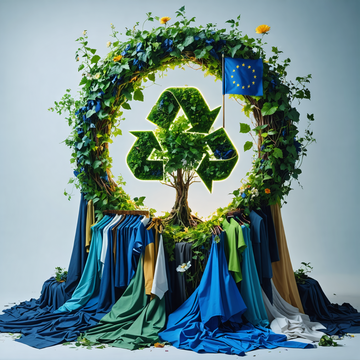
For a long time, fashion had an ugly secret: some new clothes were never worn by anyone. They were returned, left unsold, and then destroyed. In Europe, the best available estimate says that about 4% to 9% of textile products placed on the market are destroyed before first use. This waste is linked to as much as 5.6 million tonnes of CO2-equivalent emissions, almost the same as Sweden’s net emissions in 2021. (eea.europa.eu)
Now the European Union is trying to change that. The EU’s Ecodesign for Sustainable Products Regulation entered into force on July 19, 2024, and on February 9, 2026, the European Commission adopted the detailed measures needed to make the clothing rule work in practice. From July 19, 2026, large companies will be banned from destroying unsold apparel, clothing accessories, and footwear. Medium-sized companies will follow from 2030, while micro and small businesses are exempt for now. (environment.ec.europa.eu)
The rule is strict, but not absolute. Destruction can still be allowed in special cases, such as health or safety risks, serious damage, products that cannot be repaired cheaply, counterfeit goods, or cases where donation is not accepted. The EU is also pushing companies to be more open: large firms already have disclosure duties for unsold products, and a standard reporting format will apply from February 2027. In other words, brands will have to explain what they throw away and why. (environment.ec.europa.eu)
This could change fashion in a bigger way. Instead of making too much and burning the leftovers, brands are being pushed toward better planning, resale, donation, repair, and remanufacturing. The EU has also required separate collection of textiles since January 1, 2025, and its revised Waste Framework Directive entered into force on October 16, 2025, creating common rules for extended producer responsibility for textiles. That means fashion companies will increasingly help pay for collecting and treating textile waste. The likely result is a fashion system that values clothes for longer, not just until the next season ends. (eea.europa.eu)