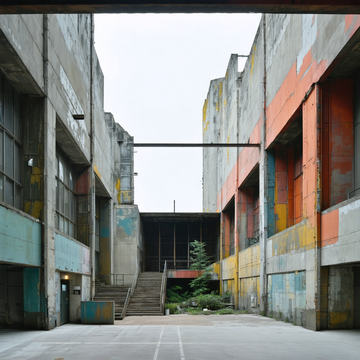
When the winners of the 2026 European Union Prize for Contemporary Architecture / Mies van der Rohe Awards were announced in Oulu on April 16, 2026, the signal was unmistakable: Europe’s most influential architecture prize was rewarding not novelty for its own sake, but intelligence in working with what already exists. The main award went to Charleroi Palais des Expositions in Belgium, where AgwA and architecten jan de vylder inge vinck transformed a 1950s convention centre instead of replacing it. The Emerging Architecture prize reinforced the same idea: Vidic Grohar Arhitekti were honored for converting a former industrial hall in Ljubljana into temporary spaces for the Slovenian National Theatre Drama. In the official press release, the jury emphasized transformation, reuse, repair, and the creative use of constraints as central values of contemporary practice. (eumiesawards.com)
This was not an isolated decision. In the 2026 awards cycle, 410 works were nominated, and 44% of them were transformations of existing buildings rather than entirely new constructions. The shortlist and finalists showed the same tendency, with multiple celebrated projects devoted to rehabilitation, adaptive reuse, and careful interventions in inherited structures. That does not mathematically prove a revolution, but it strongly suggests a change in the architectural mainstream: reuse is no longer a moral footnote to “real” architecture; it is increasingly where architectural ambition now lives. (eumiesawards.com)
The wider environmental logic is hard to ignore. UNEP reports that, in 2022, buildings accounted for 34% of global energy demand and 37% of energy- and process-related CO2 emissions, while the World Green Building Council says materials and construction alone generate 11% of global energy-related carbon emissions. Against that backdrop, demolition can look less like progress than extravagance. Charleroi is exemplary precisely because it turns scarcity into invention: the project preserved the building’s scale and monumentality, opened the stripped central hall into covered urban terraces, created a three-level garden, and used selective demolition to reconnect the complex with the city. The message of the 2026 Mies Award is therefore larger than one Belgian project. The future of architecture may depend less on how brilliantly we build from zero, and more on how imaginatively we refuse to erase. (unep.org)