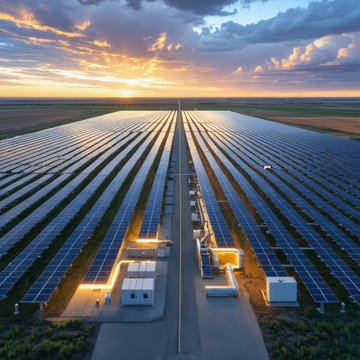
Texas is famous for oil, but now it is also becoming a solar power leader. In 2026, the U.S. Energy Information Administration says Texas is expected to get about 40% of all new utility-scale solar power planned in the United States. Texas is also expected to get about 53% of new battery storage capacity. This means Texas is not only making more clean power, but also building more ways to save that power for later. (eia.gov)
Why are big batteries important? Solar panels make the most electricity in the daytime, when the sun is strong. But people still need power at night. Large batteries can store extra electricity and send it back to the grid later. EIA says battery capacity in the Texas grid run by ERCOT is expected to grow from about 15 gigawatts in 2025 to 37 gigawatts by the end of 2027. In simple words, Texas is building a bigger “power bank” for the whole state. (eia.gov)
Some of the new projects are huge. One example is Tehuacana Creek 1 Solar and BESS in Texas. EIA says this project is expected to add 837 megawatts of solar power and 418 megawatts of battery storage in 2026. Texas is also home to other very large battery projects, including Lunis Creek BESS and Clear Fork Creek Solar and BESS. These projects show that solar panels and batteries are now being built together as a team. (eia.gov)
This change is already affecting Texas electricity. On May 13, 2026, EIA said solar power in ERCOT could produce 78 billion kilowatthours in 2026, more than coal at 60 billion kilowatthours. If that happens, 2026 will be the first year that utility-scale solar beats coal in most of Texas on a yearly basis. For English learners, this is a nice way to remember the story: Texas is still big, and now its sunshine batteries are big too. (eia.gov)