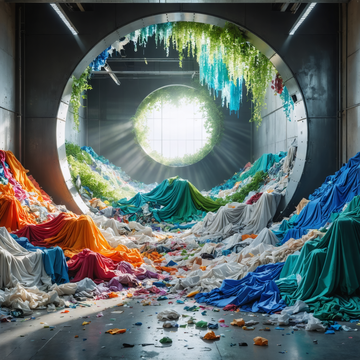
Can old clothes become new resources instead of trash? Europe is now testing that idea in a serious way. The problem is huge: the average EU citizen bought 19 kilograms of clothing, shoes, and household textiles in 2022, and EU countries generated about 6.94 million tonnes of textile waste, or 16 kilograms per person. Even more striking, 85% of household textile waste was still not collected separately in 2022, so much of it went to mixed waste, incineration, or landfill. (eea.europa.eu)
The new strategy began to move from plans to action on January 1, 2025, when EU member states were required to start separate collection of textiles. Then, on October 16, 2025, the revised Waste Framework Directive entered into force. Under these new rules, every EU country must create an extended producer responsibility system for textiles and footwear. In simple terms, companies that put clothes on the market will have to help pay for collecting, sorting, reusing, and recycling them. The fees can be adjusted so that more durable and recyclable products cost less, giving brands a reason to design better clothes. Member states have 20 months to put the law into national rules and 30 months to establish these producer systems. (eea.europa.eu)
This is not only about recycling bins. The EU’s wider textiles strategy also aims to make products last longer, become easier to repair, and become easier to recycle. It also plans tools such as a Digital Product Passport and tighter controls on waste exports. One important change is that separately collected textiles are now treated as waste until they are sorted, which should make it harder to ship low-quality waste abroad while calling it “reusable clothing.” (environment.ec.europa.eu)
Europe is also attacking waste before clothes even reach a customer. On February 9, 2026, the European Commission adopted new rules to stop the destruction of unsold clothes, accessories, and shoes. For large companies, the ban starts on July 19, 2026. This matters because the Commission says 4% to 9% of unsold textiles in Europe are destroyed before anyone wears them. Recycling alone will not fix fast fashion, but Europe’s message is clear: old clothes should be treated less like garbage and more like a valuable material. (environment.ec.europa.eu)