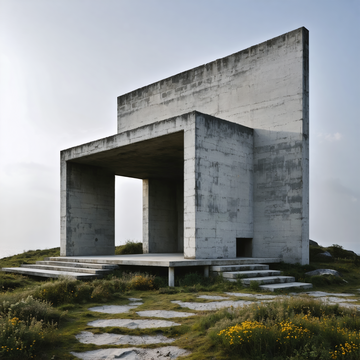
When Chilean architect Smiljan Radić Clarke was named the 2026 Pritzker Architecture Prize laureate, the jury did not celebrate loud shapes or famous “icon buildings.” Instead, it highlighted uncertainty, material experimentation, cultural memory, and the way his work creates a “quietly joyful shelter.” That is a useful way to understand Radić’s “quiet architecture”: buildings that do not shout, but still leave a deep emotional impression. They may look fragile, unfinished, or almost temporary, yet they are designed with great care to make people notice light, weather, sound, and the feeling of being protected. (pritzkerprize.com)
Radić’s quietness does not mean weakness. In fact, many of his projects are memorable because they balance opposites: heavy and light, open and enclosed, natural and artificial. His 2014 Serpentine Pavilion in London was a semi-transparent shell resting on huge stones. It worked as a social space, but it also felt dreamlike, as if it had landed softly in the park. The Pritzker jury also points to projects such as Pite House in Chile, shaped to respond to wind and harsh light, and Teatro Regional del Bío-Bío, where a restrained semi-translucent envelope controls light and supports acoustic performance. (serpentinegalleries.org)
Another important part of his architecture is silence in a human sense. The Pritzker announcement says his buildings are “inwardly focused” and show a “quiet emotional intelligence.” They invite pause and reflection instead of constant movement. This can be seen in works like House for the Poem of the Right Angle, which encourages stillness, and NAVE in Santiago, where an older damaged building was adapted rather than replaced. In Radić’s work, architecture is not only an object to look at. It is an experience to enter slowly. (pritzkerprize.com)
Radić also founded Fundación de Arquitectura Frágil in Santiago in 2017 as a place for public exchange and an archive of experimental ideas. That detail matters. It suggests that his architecture grows from curiosity, memory, and conversation, not from a fixed style. So, what is Smiljan Radić’s “quiet architecture”? It is architecture that speaks softly but stays in the mind for a long time. In a noisy age, that may be exactly why it feels so powerful. (pritzkerprize.com)