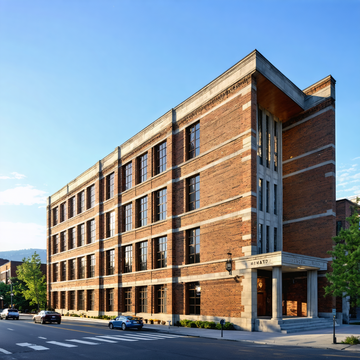
For a long time, people believed that the best way to create a “green” building was to build a brand-new one with the latest technology. However, a new February 2026 case study from RMI points in a different direction: sometimes the most sustainable building is the one that already exists. The report examines Kincaid Hall at the University of Washington, a building first opened in 1971 and later transformed into a modern home for the Department of Psychology. Instead of demolishing it, the project team preserved the main structure and brick exterior, then upgraded the roof, seismic safety, and key systems such as HVAC, plumbing, and electricity. The renovated building also achieved LEED Gold certification. (rmi.org)
The numbers are striking. According to RMI and Skanska, renovating Kincaid Hall cost about $26.7 million less than constructing a comparable new university building, and the total project budget was 46% smaller than the new-build scenario. The biggest savings came from reusing building services and the shell. On the carbon side, the renovation avoided about 2,179 metric tons of cradle-to-gate emissions, a 77% reduction compared with new construction. Reusing structural materials was especially powerful: the study found a 96% reduction in embodied carbon for concrete and an 83% reduction for steel. (rmi.org)
Why does this matter beyond one campus? Because buildings are a huge climate issue. UNEP’s 2024–2025 Global Status Report says the buildings and construction sector accounts for 32% of global energy use and 34% of global CO2 emissions, while materials such as cement and steel are responsible for 18% of those emissions. In the United States, the EPA estimates that 600 million tons of construction and demolition debris were generated in 2018. Reusing buildings can therefore cut emissions twice: by avoiding new materials and by preventing demolition waste. (unep.org)
Of course, renovation is not always easy. At Kincaid Hall, selective demolition and tenant improvements still added costs. Yet even with those expenses, the project shows a powerful lesson: “not breaking” can be smarter than building from zero. For cities trying to save money and reduce carbon at the same time, adaptive reuse is no longer just a design trend. It is becoming a serious climate strategy. (rmi.org)