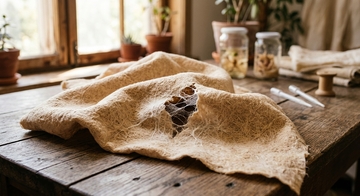
Imagine a jacket that can repair a small tear by growing new material. In July 2026, researchers in China reported a “living textile” made from mycelium. Mycelium is the network of very thin threads that forms the main body of a fungus. The team used a fungus called Cordyceps militaris to create flexible sheets that could be folded and shaped like fabric. (pubmed.ncbi.nlm.nih.gov)
The researchers first grew the fungus in liquid. Its threads joined together and formed small balls. These balls were collected and turned into thin sheets. Because many fungal cells remained alive, the material could continue growing under the right conditions.
When the fabric was damaged, the scientists placed fresh mycelium into the gap. They then added nutrients and kept the area warm and wet. New fungal threads grew across the damaged part and connected both sides. After the material dried, the repaired area became part of the sheet. However, this process needs help, so the clothing cannot completely repair itself without human action. (pubmed.ncbi.nlm.nih.gov)
The team also gave the textile other useful abilities. Special yeast produced colors inside the material, which could reduce the need for some chemical dyes. Another fungus created a dark layer containing melanin, a natural substance that helped block ultraviolet light. A soft surface made of new fungal threads also caused water drops to roll away, giving the textile a self-cleaning effect.
The researchers made a prototype dress to show how the material might be used. They also buried a sample in soil, where it almost completely broke down within 41 days. (pubmed.ncbi.nlm.nih.gov)
This living fabric is still experimental, and it may be more suitable for temporary clothing or special products than for everyday jeans and T-shirts. Still, it suggests an exciting future: clothes could be grown, repaired, and finally returned to nature.