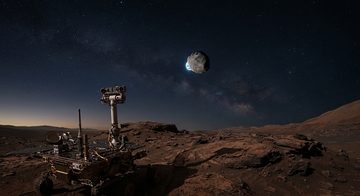
Comet 3I/ATLAS is a very special visitor. It is only the third known object to enter our solar system from another one. Astronomers first reported it on July 1, 2025, after the NASA-funded ATLAS telescope in Chile saw its unusual path through space. Because it came from far beyond our Sun, scientists have been using as many telescopes as possible to study it before it disappears forever. (science.nasa.gov)
The most exciting new result came from NASA’s James Webb Space Telescope. In observations made on December 15–16 and December 27, 2025, Webb used its MIRI instrument to study the gases around the comet after it had passed the Sun. For the first time in any interstellar visitor, Webb directly detected methane gas. This matters because methane changes from ice to gas very easily. Scientists think its late appearance means the methane was hidden under the comet’s surface and only came out after sunlight warmed deeper ice. Webb also found that the comet has a surprisingly high amount of methane compared with water, and it is also unusually rich in carbon dioxide. Compared with most comets from our own solar system, 3I/ATLAS seems chemically different. (science.nasa.gov)
So what does this tell us? It suggests that 3I/ATLAS formed in a different environment around a different star. As the comet moved away from the Sun, Webb saw its gas activity drop quickly, especially for water, which is harder to turn into gas than methane or carbon dioxide. Another Webb study, announced on June 22, 2026, found unusual forms of hydrogen and carbon in the comet. From these clues, researchers estimate that 3I/ATLAS may be 10 to 12 billion years old and may have formed in a very cold, dense region. In other words, this small comet may be carrying a chemical message from a solar system far older and very unlike our own. (science.nasa.gov)